



lesson 5.4 - the project plan: timescales, tasks & milestones
Master project planning in BTEC DIT. Learn to create timelines, identify task dependencies, and set milestones for successful user interface projects.
Welcome to the engine room of project management! Having a great idea for a digital product is one thing, but actually getting it built on time without panicking requires serious planning. Today, we're going to learn how to chop a massive project into bite-sized pieces, figure out what needs to happen first, and set up 'milestones' to celebrate our progress. Let's turn those big ideas into an actionable plan!
Learning Outcomes
The Building Blocks (Factual Knowledge)
The Connections and Theories (Conceptual Knowledge)
The Skills and Methods (Procedural Knowledge)
recall the definitions of tasks, sub-tasks, milestones, and dependencies within a project plan.
describe the key components required to create a realistic project timescale.
The Connections and Theories (Conceptual Knowledge)
analyse how task dependencies can impact the overall deadline of a digital project.
evaluate the importance of setting clear milestones to monitor project progress and maintain team focus.
The Skills and Methods (Procedural Knowledge)
apply project planning techniques to break down a project brief into logical tasks and sub-tasks.
create a structured project timeline that includes timescales, resources, and dependencies.
Digital Skill Focus: Apply digital project management principles to schedule and sequence tasks logically for a user interface design project.
The Blueprint of Success: Project Planning
Imagine trying to build a complex video game or a secure banking app without a plan. It would be chaos! In digital project management, a Project Plan is your roadmap. It takes a massive, intimidating goal and breaks it down into logical, manageable steps. This ensures everyone knows what they are doing, when they are doing it, and what resources they need to succeed.
Deconstructing the Project
To make a project manageable, we must chop it up into smaller pieces:
Tasks: These are the major blocks of work required to complete the project. For example, "Design the User Interface" or "Code the Backend Database."
Sub-tasks: These are the bite-sized steps that make up a task. If the main task is "Design the User Interface," the sub-tasks might be "Sketch wireframes," "Choose a colour scheme," and "Create digital prototypes."
Mapping it Out
Once you know what needs to be done, you have to figure out when and how:
Timescales: Every task and sub-task needs a realistic deadline and duration. If you underestimate how long "testing" takes, your whole project will be late!
Dependencies: This is the domino effect of project planning. A dependency occurs when one task cannot start until another has finished. You absolutely cannot "Test the login screen" (Task B) until you have "Coded the login screen" (Task A). Task B is dependent on Task A.
Milestones: These are significant checkpoints or goals within your timescale. They don't have a duration; they are moments in time. Examples include "Client approves initial wireframes" or "Beta version released." Milestones keep the team motivated and help track if the project is on schedule.
To visualise all of this, professionals often use a Gantt Chart, which maps tasks, timescales, and dependencies on a visual calendar.
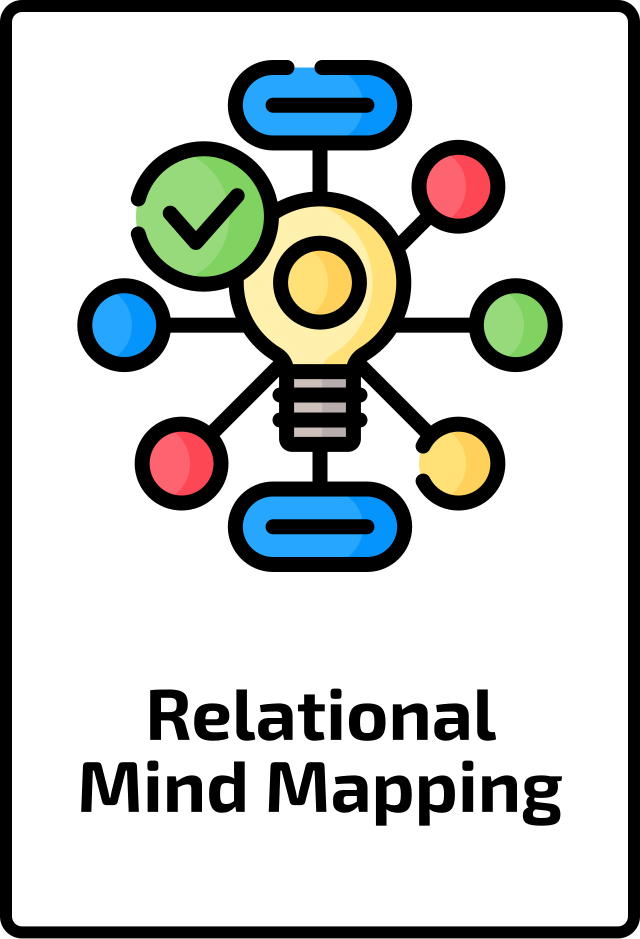
Put today's main topic in the middle of a blank page. Draw branches outward with all the key terms, but most importantly, draw linking lines between branches to show how different ideas connect to one another.

Task The Ultimate App Blueprint
You have just been hired as the Lead Project Manager for a brand new mobile app called "WeatherOrNot". The client wants the app designed, coded, tested, and launched to the public in exactly 12 weeks. If you don't plan the entire lifecycle perfectly, the project will fail!
1
Get Organised!
1
Grab a copy of the "WeatherOrNot" project brief from your teacher before you start.
2
Next, let's make sure we understand the full software development lifecycle. If you need a refresher on the stages of building software, check this out: Search Google for Software Development Life Cycle Phases
2
Break It Down
On your paper or in suitable Spreadsheet software, create a table with the following columns: Task, Sub-tasks, Timescale (Weeks), and Dependencies.
Create at least 4 main tasks that cover the whole journey: Design, Development, Testing, and Launch.
Break each main task into at least 2 sub-tasks specific to the WeatherOrNot app features.
Allocate time to each task ensuring the total does not exceed 12 weeks.
3
Spot the Dominoes
Look closely at your list. Which tasks absolutely CANNOT happen until another task is finished? (Hint: You can't test code that hasn't been written yet!). Write these into the "Dependencies" column.
Struggling to understand dependencies? Ask the AI for a simple explanation:

Act as a senior project manager. Explain what a task dependency is. Maximum 75 words. Audience is a 15-year-old computing student. Tone is encouraging and professional. You must use building a house as an analogy. NO intro, NO outro, NO deviation from the topic, NO follow-up questions.
4
Set Your Milestones
Identify three critical moments in your 12-week plan that you will mark as Milestones (e.g., "Design Approved" or "App Live"). Add these to the bottom of your plan.
Outcome: A completed 12-week project plan table featuring full-lifecycle tasks, sub-tasks, realistic timescales, logical dependencies, and clear milestones.


Application to the Component Sample PSA
Component 1: Majestic Cinema
When tackling the Majestic Cinema brief for Component 1, you cannot simply start drawing screens randomly. You must create a logical project plan for your user interface design. Your overarching task might be "Develop Handheld App Prototype." The sub-tasks would include "Create mood board," "Draw wireframes," and "Build interactive prototype." A crucial dependency here is that you absolutely cannot build the interactive prototype until the wireframes are completed and approved! Setting a milestone like "Wireframes Finalised" will help keep your design process on schedule.
Component 2: Pedal Power Cycles
For the Pedal Power Cycles data dashboard in Component 2, timescales and dependencies are critical. You will be working with a large dataset that needs preparation before any charts are made. A key dependency in this project plan is that the task "Create Pivot Charts" is entirely dependent on the successful completion of the task "Clean and Format Raw Data." If you allocate too little time to data cleaning in your timescale, your final milestone of "Dashboard Presentation" will be severely delayed!
Out of Lesson Learning
⭐ The Majestic Task List
Think about the Majestic Cinema mobile app user interface you need to design. Write down a chronological list of four main tasks you would need to complete to get from a blank piece of paper to a finished, clickable prototype.
Think about the Majestic Cinema mobile app user interface you need to design. Write down a chronological list of four main tasks you would need to complete to get from a blank piece of paper to a finished, clickable prototype.
⭐⭐ The Pedal Power Domino Effect
Imagine you are planning the Pedal Power Cycles dashboard project. Write down three specific sub-tasks related to building a chart. Then, clearly identify and explain one dependency between these sub-tasks (e.g., explain why Task B cannot start until Task A is finished).
Imagine you are planning the Pedal Power Cycles dashboard project. Write down three specific sub-tasks related to building a chart. Then, clearly identify and explain one dependency between these sub-tasks (e.g., explain why Task B cannot start until Task A is finished).
⭐⭐⭐ The Milestone Memo
Write a short, professional email to the manager of Majestic Cinema. In the email, explain to them what a 'project milestone' is, and propose one specific milestone for the midpoint of the user interface design project, explaining why hitting this milestone is critical to the overall project timescale.
Write a short, professional email to the manager of Majestic Cinema. In the email, explain to them what a 'project milestone' is, and propose one specific milestone for the midpoint of the user interface design project, explaining why hitting this milestone is critical to the overall project timescale.
Last modified: April 24th, 2026